Introduction
The Siberian is one of the world’s oldest natural cat breeds, developing over centuries in the forests and harsh climate of Russia. Known for its intelligence, affectionate temperament, athletic ability, and luxurious triple coat, the Siberian has earned a reputation as both an exceptional companion and one of the most beautiful natural breeds in the cat fancy.
Although the breed has existed for centuries, it is still relatively new in North America. The first Siberian cats were imported to the United States in 1990, making the breed younger than many people realize. Today, the Siberian continues to grow in popularity while remaining a carefully preserved natural breed.
For nearly two decades, I have been dedicated to preserving the qualities that make the Siberian unique through thoughtful breeding, careful selection, and an appreciation for the remarkable cats and breeders who helped establish the breed in North America.
Whether you’re considering adding a Siberian kitten to your family or simply want to learn more about this extraordinary breed, this guide provides an overview of its history, temperament, breed standard, health, and the foundation bloodlines that continue to influence my breeding program today.
History of the Siberian Cat
The Siberian is one of Russia’s oldest natural cat breeds, with a history that stretches back centuries. Developed through natural selection rather than human intervention, the breed evolved in the forests and harsh climate of Russia, where a dense triple coat, strong body, and resilient health were essential for survival.
Although Siberians have existed for generations in their native homeland, they are still a relatively young breed in North America. The first Siberian cats were imported to the United States in 1990 by Elizabeth Terrell of Starpoint Siberians. Those foundation cats—Ofelia Romanovna of Starpoint, Naina Romanovna of Starpoint, and Kaliostro Vasenjkovich of Starpoint—became the cornerstone of many American breeding programs and helped establish the breed in the United States.
As interest in the breed grew, additional breeders imported new bloodlines from Russia, expanding the available gene pool and strengthening the breed’s future in North America. In 1997, Dana Osborn of Willowbrook Siberians imported the first Neva Masquerade (colorpoint) Siberians to the United States: Ustin El Magrib of Willowbrook and Roskana Babyan of Willowbrook. Those early imports became the foundation of nearly every colorpoint Siberian pedigree in North America today.
My own breeding program traces back to many of these historic foundation cats. Our retired male, Twofold Salemborn of Cooncreole, is a direct descendant of Roskana Babyan and also traces back to Ofelia Romanovna through separate branches of his pedigree. Like many modern Siberians, his ancestry reflects generations of thoughtful breeding built upon those original foundation lines.
One of the things I have come to appreciate most over the years is that a pedigree is far more than a collection of names. Behind every generation are dedicated breeders, carefully selected cats, and decades of work devoted to preserving the beauty, health, temperament, and genetic diversity of the Siberian breed.
The First Siberian Cats in North America
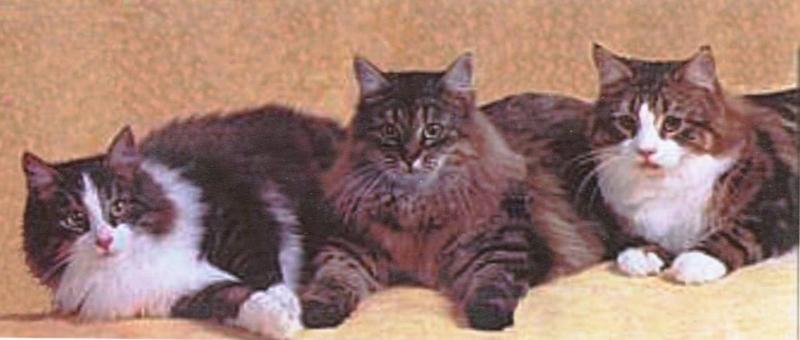
Siberian Cat Hypo-Allergenic Tendency
The most notable theory is that Siberian cats have a lower Feld1 allergen level than ordinary cats. This is the Feld1 protein found only in cats and is produced in the sebaceous glands that trigger approximately 60% allergic reactions to cats.
Typical reactions to the Feld1 allergen may vary, but can include symptoms ranging from sneezing, itchy, or swollen eyes to hives and severe difficulty breathing. Individuals allergic to cats and not other animals are often allergic only to Feld1.
All cats have some level of Fel d1 allergen, including Siberian cats. The Feld1 of Siberian cats tends to range from .5 mcg to 27.9 mcg . Allergic reactions are most severe with cats with an Fel d1 over 8.0 mcg.
Siberian Cat Breed Standard
Understanding the official breed standard is one of the best ways to recognize a well-bred Siberian cat and appreciate the qualities that define the breed. Whether you’re researching the breed or evaluating kittens, these references provide excellent educational resources. The links below will leave Dainah Rico Siberians and open in a new window.
TICA Siberian Cat Breed Standard – Official TICA breed standard with illustrations and examples of correct breed type.
CFA Siberian Cat Breed Standard – Official CFA written breed standard.
CFA Siberian Cat Breed Profile – General overview of the Siberian cat breed from CFA.
Temperament & Personality
The Siberian is celebrated not only for its striking appearance but also for its remarkable temperament. While every cat has its own personality, the breed is widely recognized for being intelligent, affectionate, confident, and deeply devoted to its family.
Often described as having a “dog-like” personality, Siberians enjoy participating in everyday life. Many follow their owners from room to room, greet visitors at the door, and quickly learn household routines. Some even enjoy retrieving toys, walking on a harness, or learning simple commands through positive reinforcement.
Despite their playful nature, Siberians are not typically demanding cats. They appreciate companionship without constantly seeking attention, making them well suited for families, individuals, and multi-pet households. When properly socialized, they generally adapt well to children, respectful dogs, and other cats.
Perhaps one of their most endearing qualities is their balance of independence and affection. They enjoy exploring their surroundings and observing everything happening in the home, yet they are equally content spending quiet time beside the people they love.
Breed Standard & Physical Characteristics
The Siberian is a naturally developed forest cat built for survival in the harsh climate of Russia. Every aspect of the breed reflects function as much as beauty.
A mature Siberian possesses a powerful, muscular body with substantial bone, rounded contours, and surprising athletic ability. Their dense triple coat provides insulation against extreme weather while remaining remarkably low maintenance compared to many other long-haired breeds.
The breed standard emphasizes a modified rounded head with broad cheeks, medium ears that blend smoothly into the head, large nearly round eyes set slightly at an angle, and a strong muzzle that creates the characteristic Siberian expression.
Siberians appear in nearly every traditional color and pattern, with the exception of colors introduced through hybridization. The Neva Masquerade, the colorpoint variety of the Siberian, shares the same breed standard while differing only in coat color and blue eye color.
Unlike exaggerated breeds developed primarily for appearance, the Siberian remains a natural breed whose structure continues to reflect the balance, strength, and functionality that allowed it to thrive for centuries.
Growth & Development
One characteristic that surprises many first-time owners is how slowly the Siberian matures. While kittens develop quickly during their first year, the breed typically requires four to five years to reach full physical maturity.
During this time, Siberians continue to broaden through the chest, develop heavier bone, improve coat quality, and mature in head type and expression. Young adults often look dramatically different at four years of age than they did as kittens.
This gradual development is one reason experienced breeders often caution against evaluating breeding cats—or even promising show kittens—too early. Patience is an important part of understanding and preserving this remarkable breed.
Although Siberians continue developing for four to five years, this extended maturation refers to their physical development—not sexual maturity. Their body, coat, bone, and overall expression continue to mature long after they reach reproductive age.
Foundation Bloodlines & Preserving the Siberian Cat Breed
The Siberian breed exists today because generations of dedicated breeders worked to preserve its natural beauty, temperament, health, and genetic diversity. Every modern pedigree represents decades of careful planning by breeders around the world who selected cats based on far more than appearance alone.
After nearly two decades of breeding Siberians, I have come to appreciate that a pedigree is not simply a list of names. It is the history of the people, breeding programs, and foundation cats whose work shaped the breed we enjoy today.
Many of the foundation bloodlines within my breeding program trace directly back to the earliest Siberians imported into North America, including influential breeding programs such as Starpoint, EmeraldForest, Sibano, Willowbrook, Five Diamond, Pyramid, and others whose careful selection helped shape the modern Siberian cat breed.
If you’d like to learn more about the remarkable cats, pedigrees, and breeders that helped shape both my breeding program and the Siberian cat breed in North America, I invite you to explore the Foundation Cats archive.